Karyagrah is your WhatsApp CRM
for sales, support, and automation
Manage every customer conversation from one place — a shared team inbox, automation & bots, broadcast campaigns, CRM, and analytics, all on the official WhatsApp Business Platform.
No credit card required · Setup in minutes
One team view for every chat.
Automate replies and routing.
Sell it under your brand.

Built on infrastructure you can trust
See how every conversation can move the business forward
Choose a capability to preview how customers interact and how your team stays in control behind the scenes.
Karyagrah Business
online
A smarter way to grow on WhatsApp
Bring sales, support and follow-ups into one connected workspace.
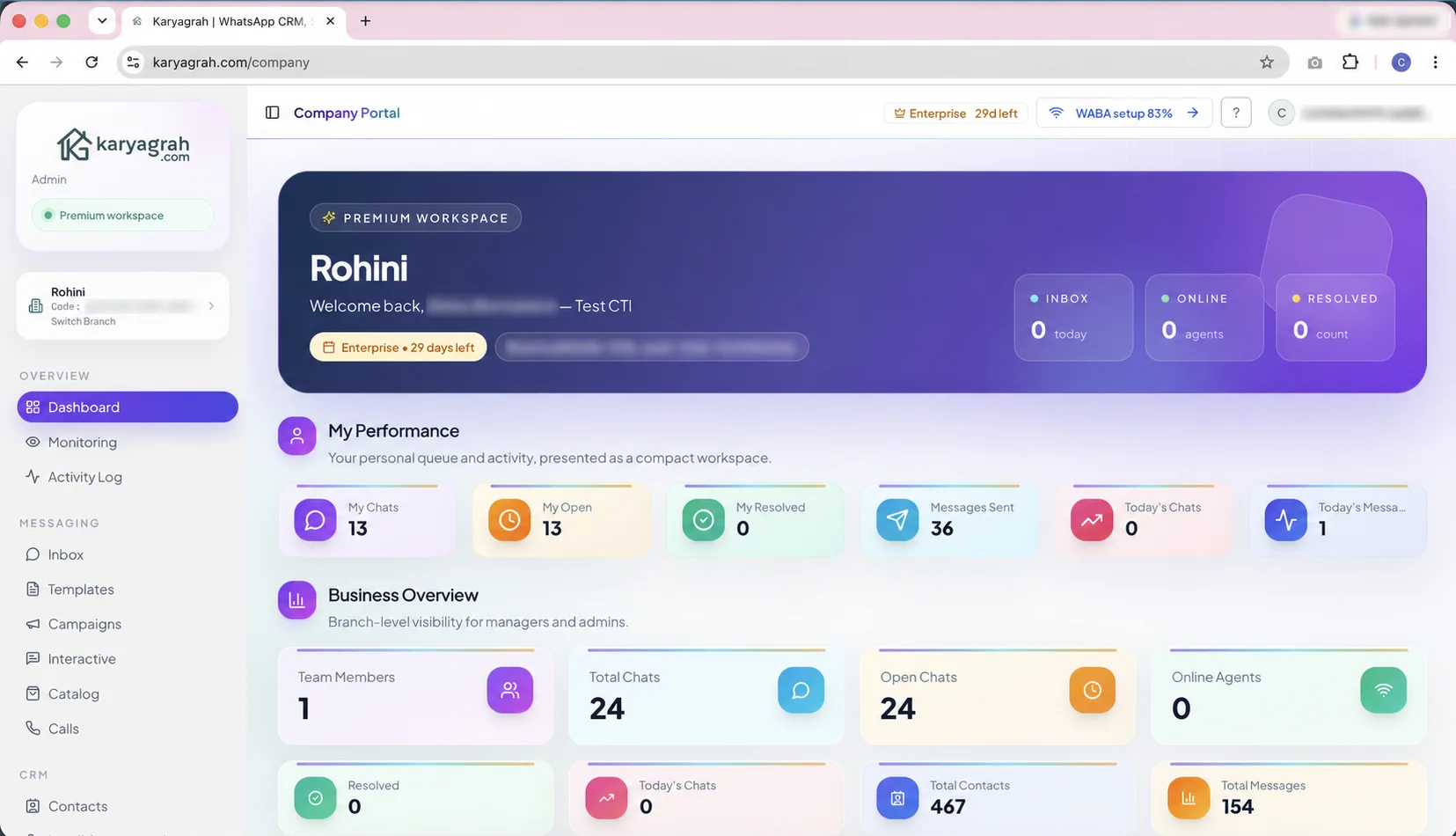
See the actual workspace your team will use
No generic mockups. Explore real Karyagrah screens and understand exactly how each part helps your team work.
See the whole operation
Know what needs attention before it becomes a problem
Track open chats, team activity, resolutions, contacts, and message volume from one branch-level command centre.
Built for support, sales, and service teams
Give every team a focused workspace while keeping the customer journey connected from first inquiry to resolution.

Support teams
Keep the inbox organized, route chats faster, and make agent ownership obvious.
Sales and commerce
Use flows, templates, and quick follow-ups to move inquiries toward conversion.
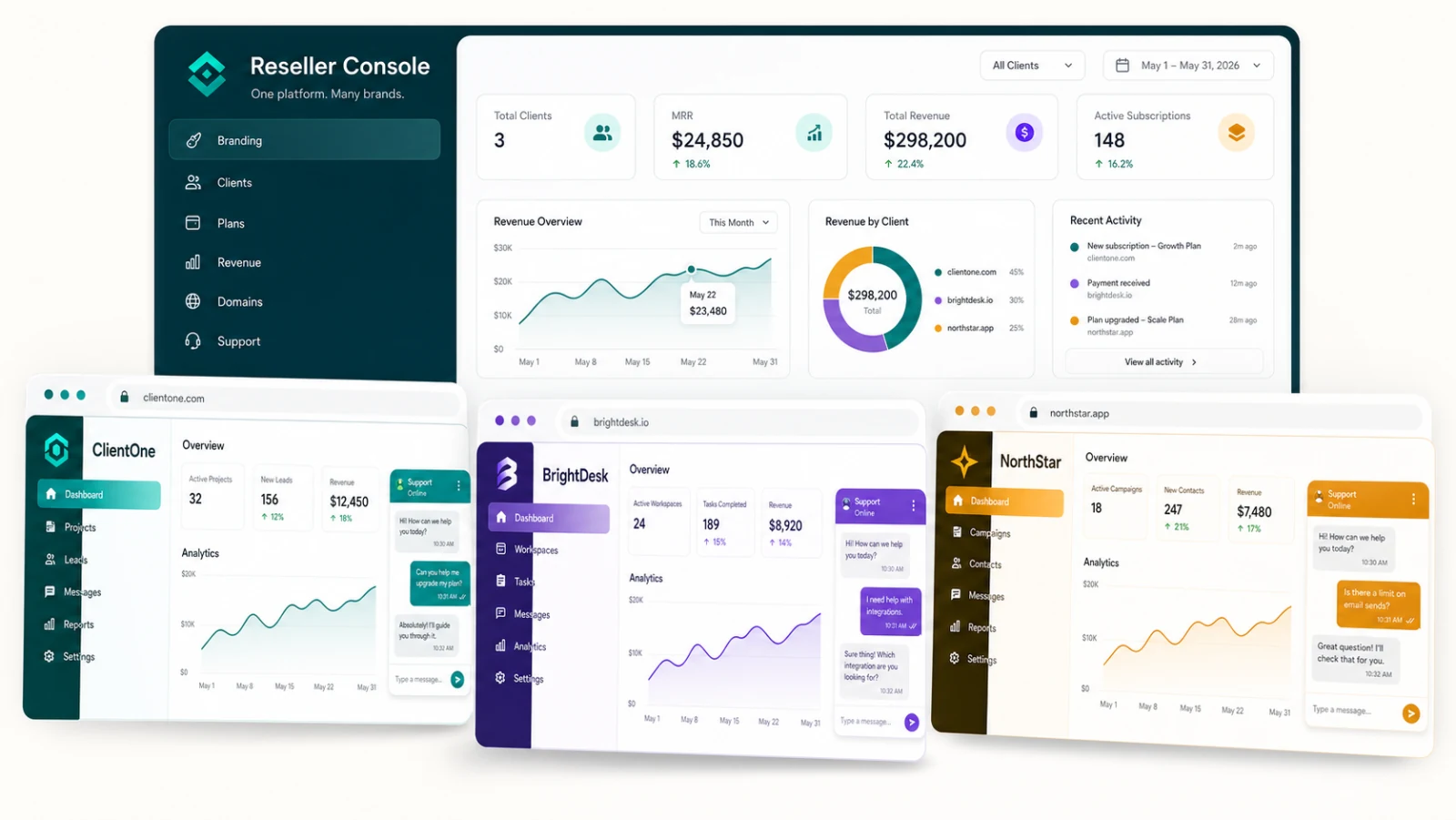
White-label teams
Offer a branded portal with pricing, onboarding, and operational control.
Numbers that speak for themselves
Your customer conversations, protected
Enterprise-grade security is built in, not bolted on. Here's exactly how we keep your business and customer data safe — no vague promises.
Encrypted message storage
Chat message content is encrypted at rest with AES-256-GCM, so your conversations stay unreadable even in the unlikely event of a database breach.
Encrypted in transit
Every request — dashboard, API, and WhatsApp webhooks — is served over TLS/HTTPS with strict transport security enforced.
Strict account isolation
Every company and branch is fully isolated with role-based access control and full audit logging of sensitive actions.
Verified WhatsApp webhooks
Incoming WhatsApp events are cryptographically signature-verified, so only genuine Meta traffic reaches your inbox.
Note: WhatsApp messages are end-to-end encrypted between your customer and Meta. Because the WhatsApp Business (Cloud API) platform delivers messages to business tools in readable form, we secure them with encryption-at-rest and strict access controls on our side.
One platform. Six serious growth engines.
Purpose-built workspaces for the people who market, sell, support, automate, operate, and scale your customer experience.

01 · Workspace
Marketing Hub
Plan broadcasts, manage templates, segment contacts, and launch campaigns that convert.

02 · Workspace
Support Hub
Handle inbound support, shared inbox queues, assignment, and faster responses.

03 · Workspace
Sales CRM
Track leads, follow-ups, tasks, custom stages, and conversion-ready workflows.

04 · Workspace
Automation & AI
Use bots, flows, AI assistants, and webhooks to automate repetitive work.

05 · Workspace
White-Label
Brand-ready branding, domain mapping, pricing mode, and billing controls.

06 · Workspace
Billing & Security
Keep accounts secure with audit trails, session controls, and configurable billing.
Loved by businesses across India
Teams use Karyagrah to respond faster, organize follow-ups, and turn more conversations into revenue.
“The shared inbox and bot builder changed how we handle customer queries. The team adopted it fast.”
“Campaign scheduling, template management, and analytics all feel cohesive. It is easy to train new users.”
“White-label support and branded dashboards make the platform fit reseller-led growth perfectly.”