Guides
How to Automate Customer Follow-ups on WhatsApp
Learn how to automate customer follow-ups on WhatsApp to respond on time, reduce missed opportunities, nurture leads, and keep customer conversations moving forward.
By Muskan · UI/UX Developer
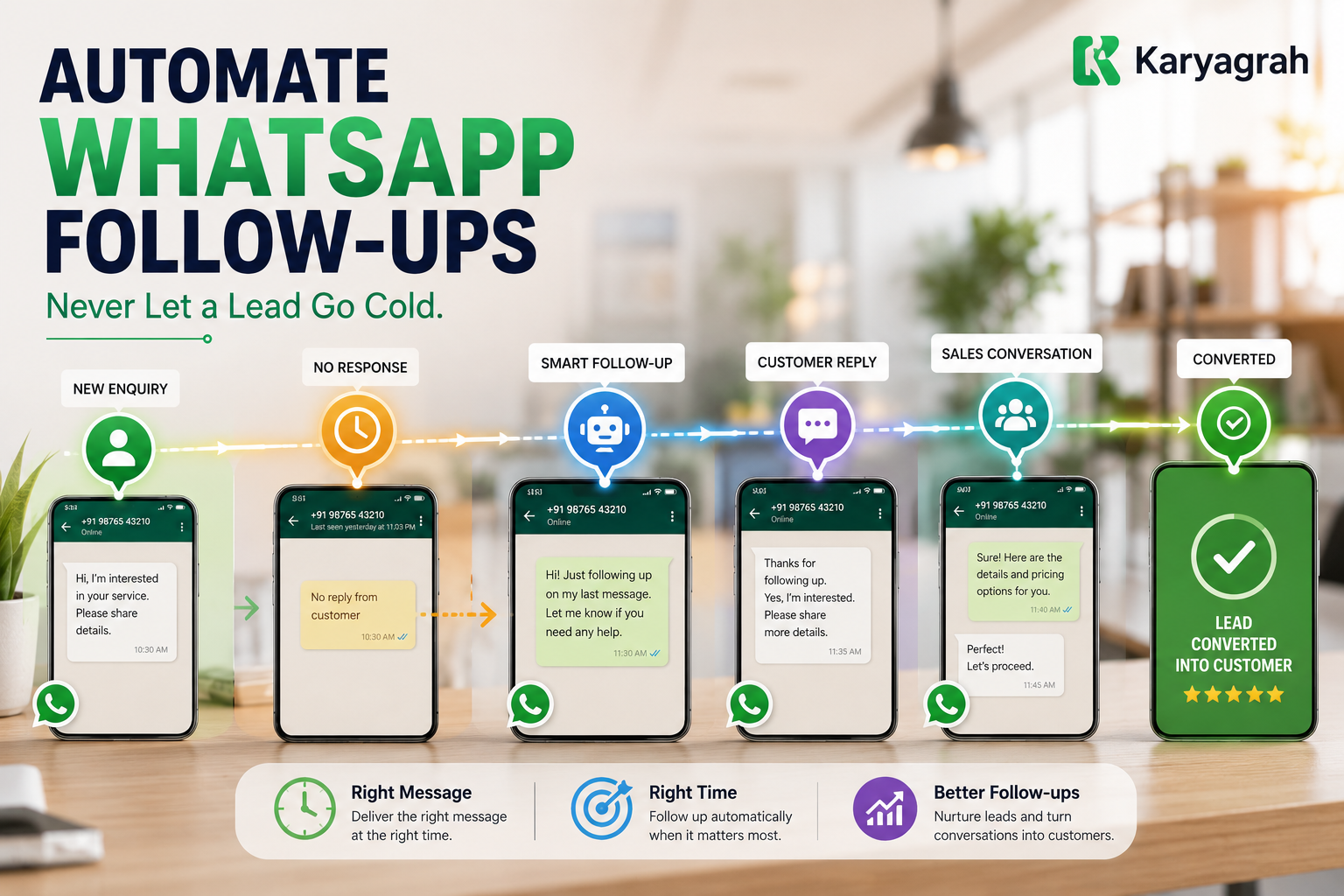
Why WhatsApp Follow-ups Matter
Customers may show interest but not take action immediately. Timely follow-ups help businesses stay connected, answer questions and keep potential opportunities from being forgotten.
What Is an Automated WhatsApp Follow-up?
An automated follow-up is a predefined message or workflow triggered at the right stage of a customer journey, reducing the need to manually remember every conversation.
Follow Up with New Leads
When a new enquiry arrives, businesses can organize the lead and schedule suitable follow-ups if the customer does not respond or needs more information.
Benefits of Automated Follow-ups
Automated follow-ups can reduce manual work, improve consistency, save team time and help businesses manage more customer conversations without losing track of important leads.
Automate Follow-ups with Karyagrah
Karyagrah helps businesses organize leads, customer conversations and follow-up workflows so teams can manage WhatsApp communication more efficiently.
Official sources and further reading
WhatsApp policies, product behaviour and pricing can change. Refer to these first-party resources for current rules.
- About the WhatsApp Business Platform — Meta for Developers
- WhatsApp Business Messaging Policy — WhatsApp
Frequently asked questions
What is an automated WhatsApp follow-up?
It is a predefined follow-up message or workflow triggered according to a customer action, stage or business-defined condition.
Can businesses automate lead follow-ups on WhatsApp?
Yes, suitable lead follow-up workflows can be automated depending on the business setup and applicable WhatsApp messaging requirements.
When should a business follow up with a customer?
Timing depends on the customer's action and context. Follow-ups should be relevant and helpful rather than repetitive or excessive.
Can automated follow-ups be personalized?
Yes. Businesses can use available customer information and journey stages to make suitable follow-up communication more relevant.
Can follow-up automation replace sales teams?
No. Automation is best used for repetitive tasks and reminders, while human teams handle conversations requiring judgment, negotiation or personalized assistance.